Guide
Winter Activities for Preschoolers: 15 Easy Ideas at Home
Short answer: The best winter activities for preschoolers are simple and hands-on, and use what you already have: rolled-up socks, paper, crayons, tape, a tub and some ice or snow. Mix one active game with one quiet table activity, go outside when the weather allows, and stay close during any play with water, ice or snow. Children under 3 need closer supervision and no small parts.
What makes a winter activity work for ages 3 to 5?
Winter often means more time indoors and more time getting dressed to go out. The ideas below follow three simple rules:
- One clear step at a time. “Throw the snowball in the basket” is easier to follow than a craft with many parts.
- Things you already have. Socks, paper, tape, spoons, towels and plastic containers cover nearly everything here.
- Easy to stop. Children vary a lot in how long they stay with one thing. Stop while it is still fun, and try it again another day.
Indoor games to get moving
- Sock snowball toss. Roll pairs of socks into balls and toss them into a laundry basket. Step back a little after each round, or count how many land inside.
- Snowy path. Stick a long line of masking tape on the floor and walk along it like a narrow path through the snow. Try walking heel to toe, or slowly like a penguin.
- Paper plate skating. On a carpet, stand with one paper plate under each foot and slide around slowly. Keep to carpet, away from furniture and stairs, because plates on a hard floor can slip fast.
Quiet table activities
- Torn-paper snowman. Draw three circles on dark paper. Your child tears white paper into pieces and uses a glue stick to fill them in, then adds a face with crayons.
- Paper snowflakes. An adult folds a square of paper. Your child makes a few snips with child-safe scissors while you stay close, then unfolds it. No two will match, and that is part of the fun.
- Mitten match. Cut several large mitten shapes from paper, in pairs. Color each pair the same way, mix them up, and find the matches. Real gloves and socks from the laundry work too.
Counting, shapes and letters
- Snowball counting. Write the numbers 1 to 5 on sheets of paper. Your child puts that many rolled-up socks on each sheet. Add more numbers only if your child wants them.
- Big, medium, small. Cut three paper circles in different sizes and put them in order to build a snowman. Then swap the order and see how silly it looks.
- Finger letters in a flour tray. Spread a thin layer of flour on a baking sheet and draw a letter with one finger, starting at the top. Shake gently to erase. Skip this if anyone at home has a wheat allergy, or use a sheet of paper and a crayon instead.
- A tracing page. When your child wants to sit and draw, try a page or two from our free ABC, number or shape tracing workbooks, or make a page with our name tracing generator. These are simply practice, so stop when interest fades.
Simple ice and snow play
- Melt the ice block. Freeze water overnight in a large plastic container, so you get one big block and not small cubes. Put it on a baking sheet over a towel, and let your child pour warm tap water over it with a spoon. An adult checks that the water is only warm.
- Which melts first? Put one equal scoop of snow or ice in each of two cups. Leave one on the counter and one in the fridge. Ask your child to guess, then look again later. The cups stay on a table for looking at, not for drinking from.
- Snow in a tub. Bring a tub of clean-looking snow inside, set it on a towel, and add cups and spoons. Mittens make it more comfortable. Wash hands afterward. No snow where you live? Use shredded white paper in the tub, for children past the mouthing stage.
Outdoor and cozy ideas
- Winter look-and-find walk. Before you go, draw a short list together: a bird, a bare tree, a footprint, something green. Bring it along and check things off. It works with or without snow.
- Bear cave story time. Drape a blanket over two chairs to make a cave. Curl up inside like hibernating bears and read a winter picture book. Afterward, ask your child to draw one thing that happened in the story.
Before going out, dress your child in layers and bring a dry spare pair of mittens. A neck gaiter is a good swap for a long scarf, which can catch on play equipment. Come in if your child is wet, shivering or says their fingers or toes hurt.
A simple weekly plan
| Day | Active | Quiet |
|---|---|---|
| Mon | Sock snowball toss | Torn-paper snowman |
| Tue | Snowy path | Mitten match |
| Wed | Look-and-find walk | Bear cave story time |
| Thu | Paper plate skating | Big, medium, small |
| Fri | Melt the ice block | A tracing page |
Busy week? One activity is plenty, and repeating a favorite is just as good as trying something new.
If you want something ready to use
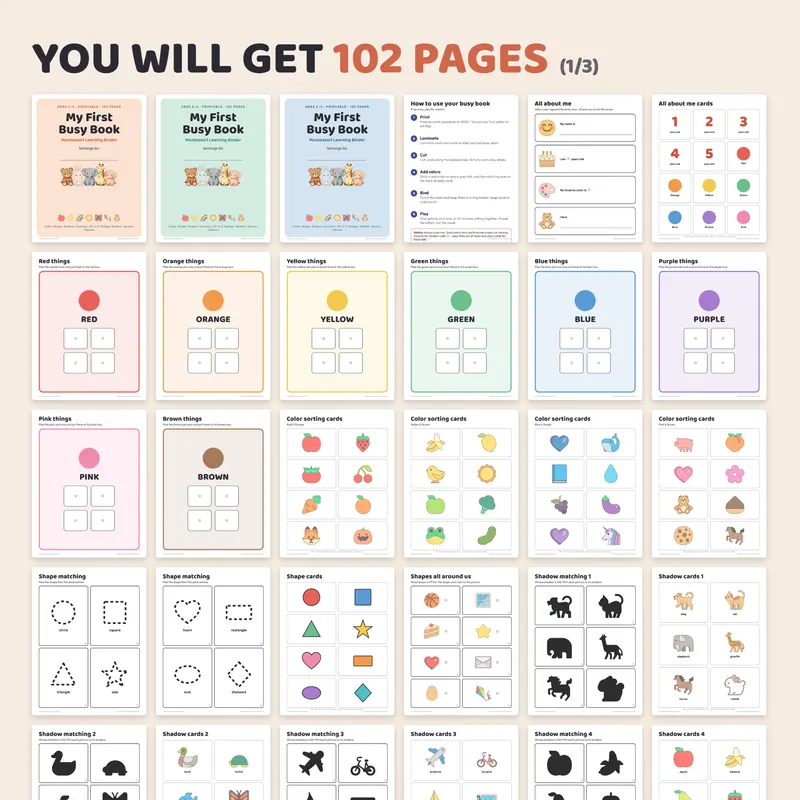
None of these activities needs a printable. If you would like a ready-made option for indoor days, our Toddler Busy Book has 102 pages for ages 2 to 4, and it is not tied to any season. For children who enjoy story time, the Personalized Reading Challenge is a chart for ages 3 to 7 that tracks books read together.
Get the printable
You don’t need to buy anything for the activities above. If you would like a ready-made option for indoor days, these are sold on Etsy, where you see the price in your local currency.
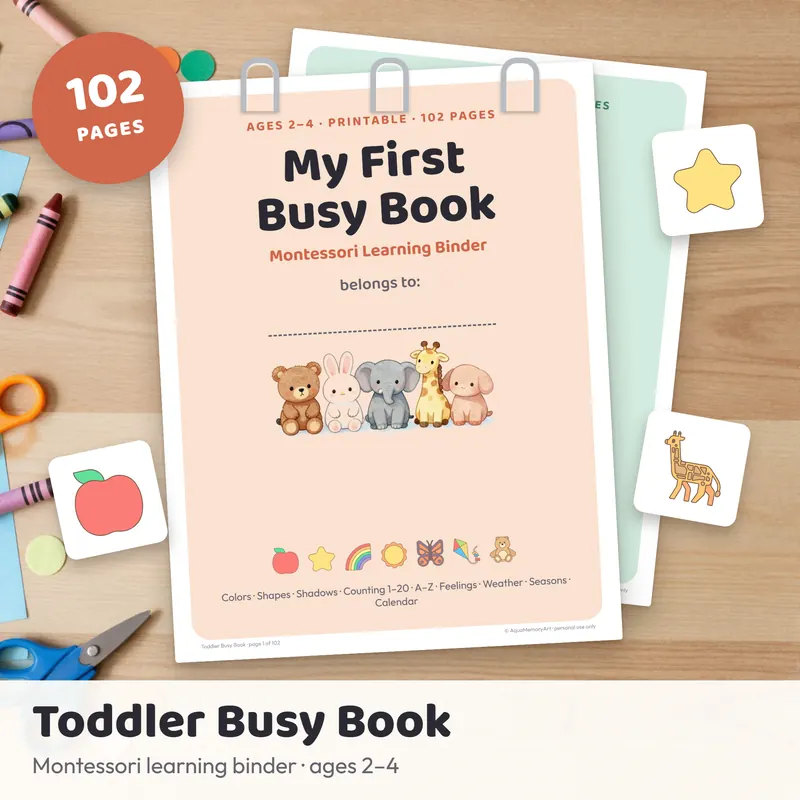
Toddler Busy Book Printable (Montessori Learning Binder)
102 pages · ages 2–4 · US Letter + A4 PDF
- Color, shape and shadow matching mats with picture cards
- Count 1–10 ten-frame mats, numbers 1–20 and an A–Z page for every letter
- Weather, calendar, feelings, seasons and sorting activities
Instant download on Etsy · print at home
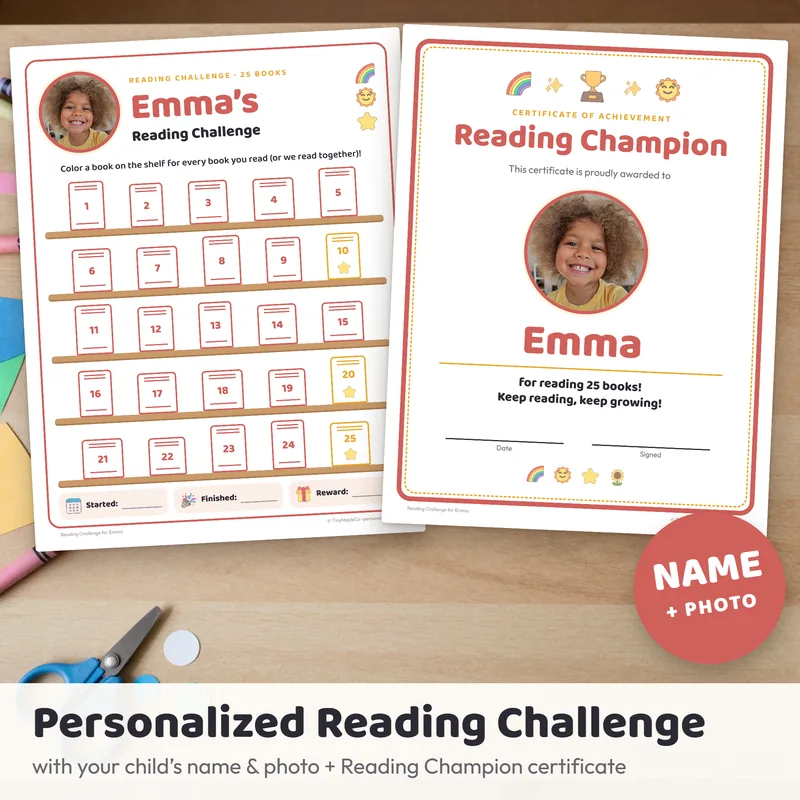
Personalized Reading Challenge + Reading Champion Certificate
25- or 50-book goal · ages 3–7 · name + optional photo
- Bookshelf tracker: color one book for every book read
- Reading log pages with a 3-star “I liked it” scale
- Reading Champion certificate + 4 name bookmarks
Personalized on Etsy · PDF files delivered within 24 hours
Frequently asked questions
What are good winter activities for 3 year olds?
Try one-step activities such as tossing rolled-up socks into a basket, walking along a line of masking tape, matching paper mittens or tearing paper for a snowman. Keep torn paper and small pieces away from any child who still puts things in their mouth, and stay close.
What can preschoolers do inside on a cold day?
Mix something active with something quiet. A sock snowball toss or paper plate skating on carpet gets them moving. Paper snowflakes, counting games and a blanket cave for story time are calmer choices. All of them use things most homes already have.
Is ice play safe for preschoolers?
It can be, with an adult right there. Use one large block of ice, not small cubes or chips, and keep ice out of mouths because small pieces can be a choking risk. Check that any water you pour is only warm, and empty trays and tubs when you finish.
Can preschoolers eat snow?
It is best to teach them not to. Snow can pick up dirt and other things from the ground and the air. Treat snow as something for hands and mittens, and offer a drink or a snack from the kitchen instead.
How do I do winter activities if we have no snow?
Almost everything on this list works without snow. Rolled-up socks stand in for snowballs, a block of ice from the freezer covers melting play, and shredded white paper can fill a play tub for children past the mouthing stage. A look-and-find walk works in any weather that is safe to be out in.