Routines
Winter Break Schedule for Kids at Home: A Simple Plan
A winter break schedule that works for kids is a loose daily rhythm, not a timetable: a regular wake-up time, an active block in the morning, a creative or learning block, quiet time after lunch, an outing or free play in the afternoon, and the usual bedtime routine. Add a theme for each day of the week and agree on screen time in advance. That gives kids structure and you a plan.
Two weeks at home can feel long for everyone. A rhythm keeps the days from blurring together.
The daily rhythm
| Part of day | What happens |
|---|---|
| Morning (wake–9:30) | Breakfast, get dressed, morning routine |
| Mid-morning (9:30–11:30) | Active: outside, park, walk, sled, dance |
| Late morning (11:30–12:30) | Creative or learning: crafts, a worksheet, baking |
| Lunch (12:30–1:15) | Lunch and tidy-up |
| Early afternoon (1:15–2:30) | Quiet time: books, puzzles, audiobooks, naps for little ones |
| Afternoon (2:30–5:00) | Outing, playdate, games or free play; screen time if planned |
| Evening (5:00–bed) | Dinner, family time, bedtime routine |
Times are flexible. What matters is the order, so children can predict what comes next.
Keep sleep and mornings steady
It is tempting to let bedtimes drift, but children usually do better when wake-up and bedtime stay close to normal. The AAP recommends regular sleep times, including weekends and breaks, and screens off at least an hour before bed (healthy sleep habits). A later bedtime for a party is fine; three weeks of late nights tends to make the return to school harder.
If you use a picture routine chart for school mornings, keep using it for break mornings. My morning routine chart guide explains how to set one up, with a free 2-page sample.
Themed days make planning easy
Instead of planning each day from scratch, give each weekday a theme:
- Make-it Monday: a craft, paper snowflakes, homemade cards.
- Treat Tuesday: bake something simple together.
- Wild Wednesday: outdoors all morning, rain or snow (with the right clothes).
- Thinking Thursday: a puzzle, a library trip, a science experiment with ice.
- Friend Friday: a playdate or a video call with a cousin.
- Saturday and Sunday: family plans or a lazy day.
Ideas for each block
Active
- Snow play, sledding, building a snowman
- A winter walk with a scavenger hunt list
- Indoor obstacle course with cushions
- Freeze dance or a yoga video
Creative and learning
- Paper snowflakes and window decorations
- Writing thank-you notes for gifts
- One worksheet or a reading challenge page
- Baking and measuring ingredients
- Building with blocks or cardboard boxes
Quiet
- Books, audiobooks and comics
- Coloring pages
- Puzzles and busy books for little ones
- Lego or quiet building
Afternoon
- Board games and card games
- Library, museum, indoor play area
- Movie afternoon with blankets
- Free play with new toys
Screen time without the arguments
Decide in advance, together with your kids, when screens happen. For example: “Screens are from 3 to 4 pm, after quiet time and outside time.” A fixed slot is easier than negotiating all day. Families vary in how much screen time they allow; the AAP encourages families to make a family media plan and to prioritize sleep, play and time together.
A sample week
| Morning | Late morning | Afternoon | |
|---|---|---|---|
| Mon | Park | Paper snowflakes | Board games |
| Tue | Walk | Bake cookies | Visit grandparents |
| Wed | Snow play | Hot cocoa, thank-you cards | Movie |
| Thu | Library | Ice science experiment | Playdate |
| Fri | Indoor obstacle course | Reading challenge | Free play |
| Sat | Family outing | ||
| Sun | Lazy morning | Tidy up, prepare for the week |
Short learning moments (optional)
A little practice can keep skills fresh without turning break into school:
- Read together daily
- One short worksheet a day for kids who enjoy them
- Cooking: measuring and counting
- Writing thank-you notes and shopping lists
For preschool and kindergarten, my Christmas printables bundle guide has a week-by-week plan for December, including the week when parties and school break begin, with a free 2-page sample. Our Christmas Worksheets PreK + K have short, clearly leveled pages if your child enjoys a page or two in the morning.
Show the plan
Write each day’s plan on a whiteboard or a sheet of paper on the fridge, with pictures for non-readers. Kids ask “What are we doing today?” less when they can see it. A picture chart like our Kids Routine Flip Chart, which includes a Weekend chart, works well for break days too.
Leave room for nothing
Not every block has to be filled. Some of the best break moments are unplanned: a long bath, building a blanket fort, a pajama day. A rhythm gives shape to the day; it does not need to fill every minute.
For working parents
If you are working from home during part of the break, put the quiet block and any screen time in your busiest work hours, and plan the active block for your lunch break or early morning. Swap childcare days with another family if you can: one day you host both sets of kids, another day they do. Even two free days make the break much easier.
Steady sleep, a predictable order, a theme for each day and a fixed screen slot. That is enough structure for a calm winter break.
Printables that go with this post
These are from my shop on Etsy, where you see the price in your local currency.
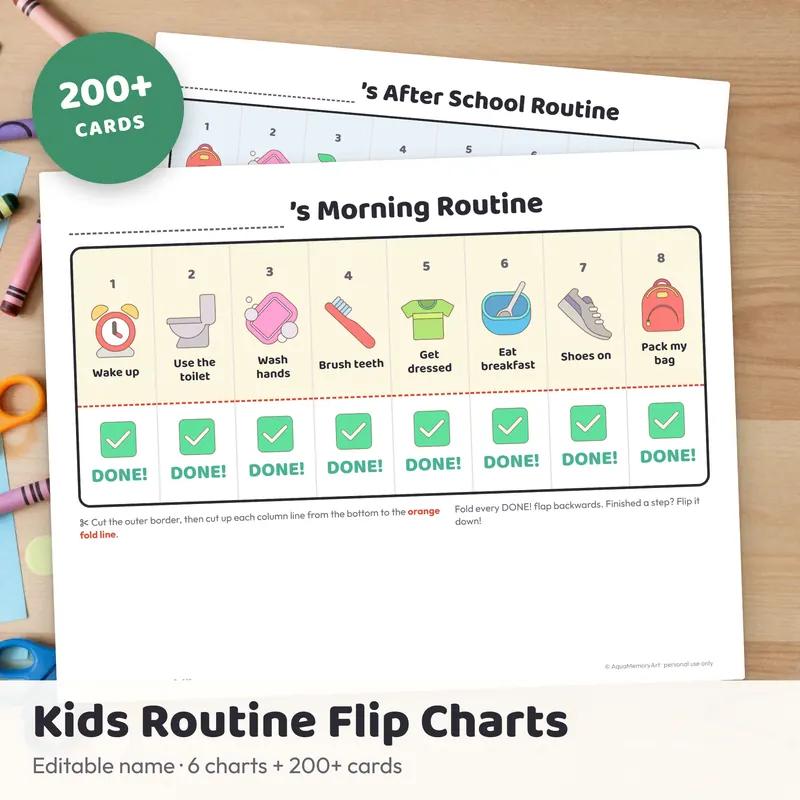
Kids Routine Flip Chart Bundle
5 flip charts + 1 blank · 216 picture cards · color + black & white
- Morning, After School, Bedtime, Chore and Weekend charts, 8 steps each
- Every step has a “DONE!” flap kids flip over when they finish
- Fillable name field; color and black & white sets in US Letter and A4
Instant download on Etsy · print at home
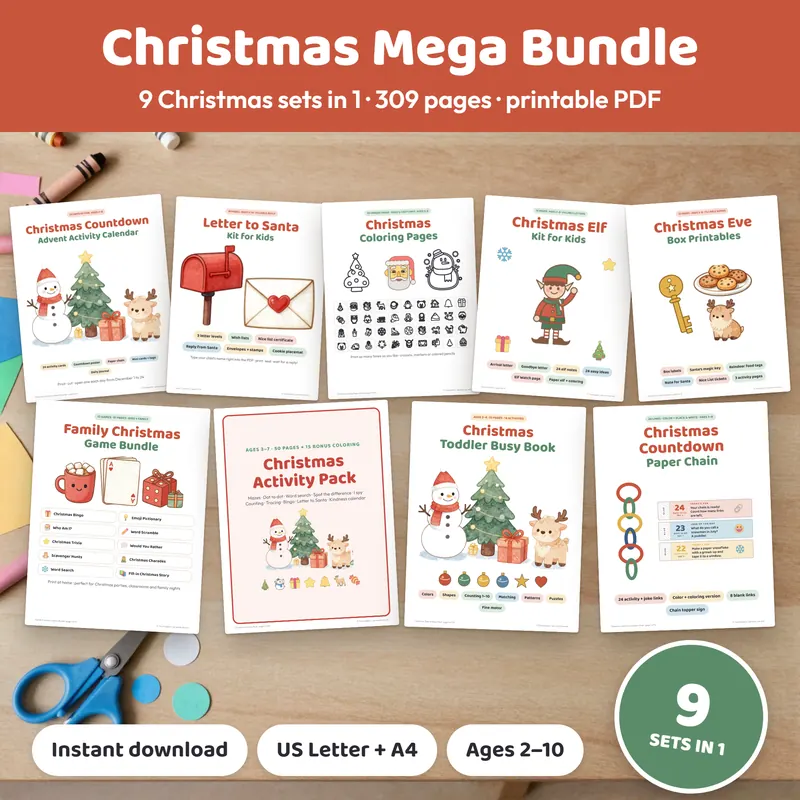
Christmas Mega Bundle (9 Sets in 1)
9 Christmas sets · 309 pages per paper size · ages 2–10
- Activity Pack, Advent Activity Cards, Letter to Santa Kit, 50 Coloring Pages, Elf Kit
- Games Bundle, Toddler Busy Book, Christmas Eve Box, Countdown Paper Chain
- A “START HERE” guide; US Letter and A4 versions
Instant download on Etsy · print at home
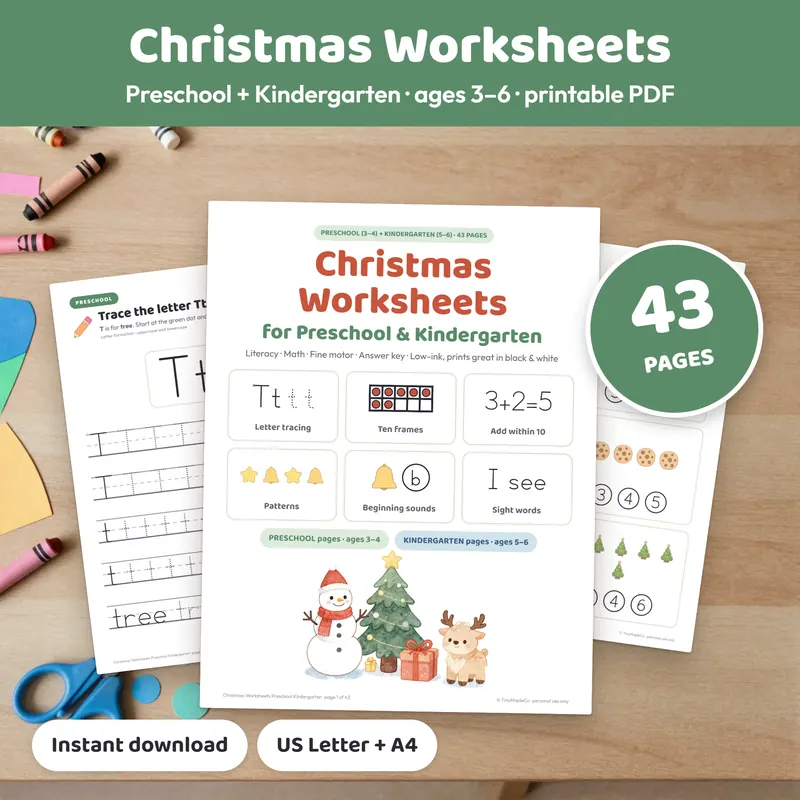
Christmas Worksheets for Preschool + Kindergarten
43 pages · Preschool (3–4) + Kindergarten (5–6) levels · US Letter + A4
- Letter tracing, beginning sounds, CVC words and sight words
- Counting, ten frames, number tracing 1–20 and adding within 10
- Cutting practice, mazes and a 2-page answer key
Instant download on Etsy · print at home
Frequently asked questions
Should kids have a schedule over winter break?
A loose rhythm helps most kids: similar wake-up and bedtimes, meals at regular times, and a pattern for each part of the day. It does not have to be timed to the minute.
How do I keep kids busy over winter break without screens all day?
Plan one outing or active block each day, one creative or learning block, and a quiet time. Agree on screen times in advance so they are not negotiated all day.
Should kids do schoolwork over the break?
A little reading each day is plenty for most kids. Short practice pages can help some children who enjoy them, but rest is part of the point of a break.