Learning at home
Quiet Time Activities for 3 Year Olds (That Last)
Quiet time for a 3 year old works best as a predictable 30–60 minute rest in the same spot after lunch, with a small basket of calm activities they can do alone and a clear visual signal for when it ends. Start with 15–20 minutes, rotate the basket weekly, and keep the activities open-ended so they do not need you.
Many children start dropping their nap somewhere between 3 and 5. Quiet time keeps a rest in the day for them and gives the grown-ups a break.
How to set it up
- Same time, same place. Right after lunch is common. Their bedroom, a reading corner or a blanket on the living room floor all work.
- Childproof the space. Furniture anchored, cords tidy, nothing within reach that they should not play with alone. Quiet time only works if the room is safe without you in it.
- Use a visual end signal. A toddler clock that changes color, or a sand timer for short sessions. Three year olds cannot read clocks, but they can wait for green.
- Start short. 15–20 minutes the first week, then add 5 minutes weekly.
- Prepare a quiet time basket. Four or five activities, rotated each week so they feel new.
- End warmly. A snack or a short book together tells them quiet time was a good thing.
A picture card for “quiet time” on a routine chart helps, too: when they see it coming after “lunch,” there is less arguing.
15 quiet time activities that work alone
Books and listening
- A basket of board books and picture books, including a few they know by heart so they can “read” them alone.
- Audiobooks or calm music on a simple player they can operate.
- “Read” to stuffed animals. Line them up; your child is the teacher.
Hands-on, low mess
- Busy book pages. Laminated mats with hook-and-loop pieces: sort colors, match shapes, count. My toddler busy book guide has 15 page ideas and assembly tips, plus a free 2-page sample (a color sort mat and its pieces) to try.
- Chunky puzzles of 4–12 pieces.
- Stickers on a blank sheet. Big stickers, peeled at the corner for them.
- Lacing cards with a thick shoelace.
- Large building blocks such as Duplo-sized bricks.
- Sorting tray: a muffin tin and large pom-poms or toy animals to sort by color (larger than a choking-test size; see the safety note below).
- Magnetic tiles or a magnetic drawing board. Check that magnets are fully enclosed and the toy is age-labeled for 3+.
Drawing and coloring
- Coloring pages with bold, simple lines. Three year olds get frustrated by detailed pictures. Big shapes, thick outlines.
- Crayons and blank paper. Plain paper is often more absorbing than a page with a picture.
- Water-reveal pads for children who still put crayons in their mouths.
Pretend play
- A small world tray: a few toy animals on a blanket “farm.”
- Dress-up for a doll or teddy, with clothes that use large buttons or hook-and-loop.
Activities to leave out
- Anything with small parts for children who still mouth objects. Beads, small magnets and coins are common culprits.
- Markers without lids that click on securely if they will be unsupervised.
- Scissors and glue. Save them for times when you are at the table together.
- Screens, if you want the time to stay restful. The AAP recommends limiting screen time for preschoolers and turning screens off at least an hour before sleep (see its healthy sleep habits page).
Safety note
Children under 3, and older children who still put things in their mouths, can choke on small toys and food. If you are unsure whether an item is too small, the AAP’s choking prevention advice is a good reference. Check the room, then check on your child partway through, especially in the first weeks.
What if they do not stay?
This is the most common problem, and it is normal.
- Walk them back calmly, with as few words as possible: “It is still quiet time. The clock is not green yet.”
- Make the room more interesting, not the alternative. A new basket item on Monday helps.
- Lower the time. If 30 minutes is a battle, go back to 20 and build up again.
- Offer one “check-in” card. They can come out once to show you something, then go back.
A weekly rotation idea
| Week | Basket |
|---|---|
| 1 | Board books, busy book color pages, chunky puzzle, stickers |
| 2 | Audiobook, lacing cards, coloring pages, toy animals |
| 3 | Picture books, magnetic board, busy book shapes, blocks |
| 4 | Favorite items from weeks 1–3, chosen by your child |
Letting them pick in week 4 builds a little ownership.
Printables that help
If you want ready pages to rotate, our Toddler Busy Book has color sorting, shape and shadow matching, count mats and A–Z pages for ages 2–4, and the 50 Christmas Coloring Pages use bold, easy lines that suit 3 year olds in December. Print a few at a time; a stack of 50 at once is less interesting than three new ones on Monday.
Quiet time takes a few weeks to stick. Once it does, it becomes a calm, ordinary part of the afternoon.
Printables that go with this post
These are from my shop on Etsy, where you see the price in your local currency.
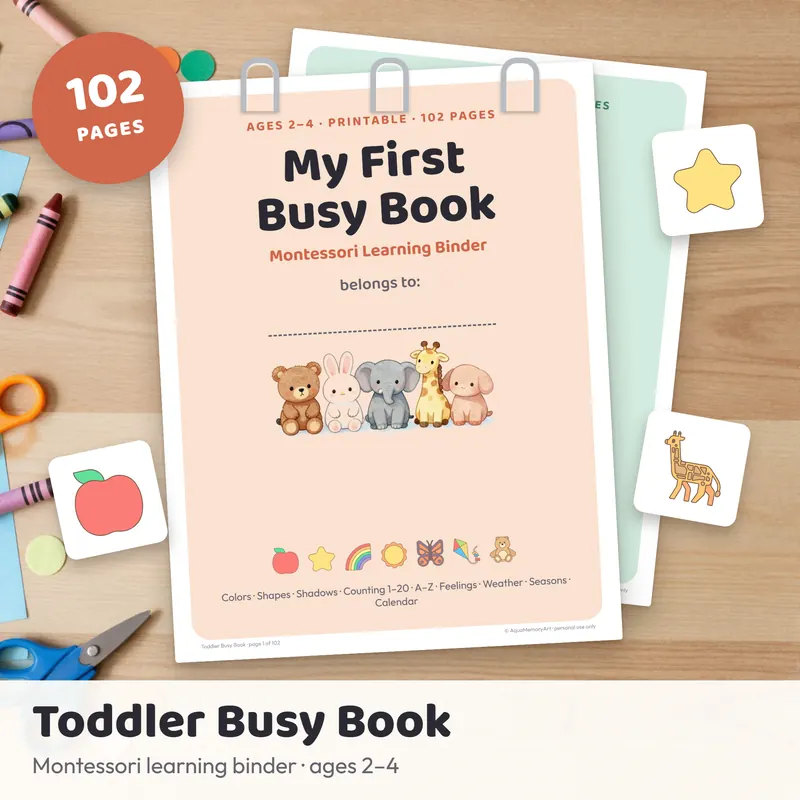
Toddler Busy Book Printable (Montessori Learning Binder)
102 pages · ages 2–4 · US Letter + A4 PDF
- Color, shape and shadow matching mats with picture cards
- Count 1–10 ten-frame mats, numbers 1–20 and an A–Z page for every letter
- Weather, calendar, feelings, seasons and sorting activities
Instant download on Etsy · print at home
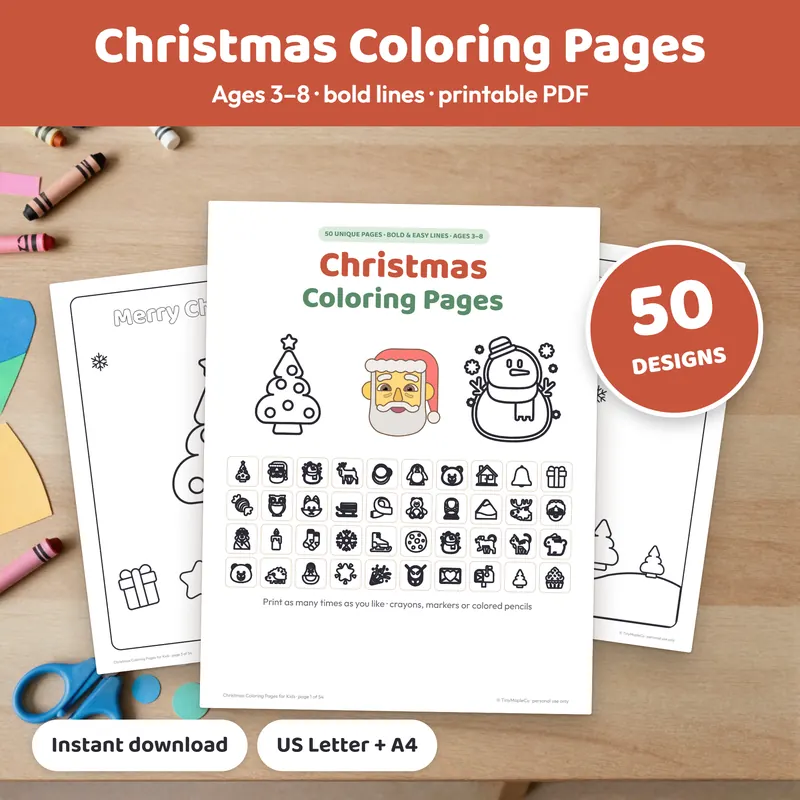
50 Christmas Coloring Pages for Kids
54 pages · 50 designs · ages 3–8 · US Letter + A4 PDF
- 50 different designs with bold, easy lines
- Santa, reindeer, snowmen, cozy treats, cute animals and pattern pages
- Printing tips page + a “Super Colorist” certificate
Instant download on Etsy · print at home
Frequently asked questions
How long should quiet time be for a 3 year old?
Start with 15–20 minutes and add 5 minutes each week. Many 3 year olds settle at 30–60 minutes once it is a habit.
What if my child keeps coming out of the room?
Use a visual cue such as a toddler clock that changes color, or a simple timer, and walk them back calmly without a lecture. Shorter quiet time that works is better than a long one that is a fight.
Is quiet time a replacement for naps?
It is a rest period for children who no longer nap or nap only some days. If your child falls asleep during quiet time, they may still need that nap.