Learning at home
Reading Challenge Ideas for Kindergartners (Ages 4–6)
A good reading challenge for a kindergartner is short, visual and generous about what counts. Set a goal such as 25 books, count every read-aloud and reread, track progress with something they can color or stick, and add a few themed mini-challenges to keep it fresh. Celebrate finishing with a certificate or a library trip, not a big prize.
At this age, a reading challenge is less about reading independently and more about building a steady habit of sharing books together.
Choose a realistic goal
| Time frame | Goal | Roughly |
|---|---|---|
| 1 month | 15–25 books | Most evenings, with rereads counted |
| 2 months / winter break | 25 books | A few books a week |
| A term or summer | 50 books | Steady pace |
For many kindergartners, 25 is the sweet spot: big enough to feel like a real achievement, small enough to finish while they still care.
Decide what counts (be generous)
- Picture books you read aloud
- Books they “read” from the pictures
- Early readers they decode with you
- Rereads of a favorite (yes, the same book five times can count as five)
- Audiobooks while following along in the book
- Library story time
Being strict about what counts is the quickest way to turn a challenge into homework.
Set up a tracker they can see
Kindergartners need to see progress. Options:
- A bookshelf drawing with 25 empty books; color one in for each book read.
- A paper chain that grows one link per book across a doorway.
- Sticker chart with 25 squares.
- A simple log: title, date and a smiley rating (one, two or three stars).
Put the tracker somewhere visible, such as the fridge or by the bed.
12 mini-challenges to mix in
Mini-challenges keep a long goal interesting. Use one a week, or whenever interest drops.
- Animal week: only books with animals.
- Read in a fort: blankets, a flashlight, three books.
- Read to a pet or a stuffed animal.
- A book from the library that you have never seen before.
- A rhyming book day: spot the rhyming words together.
- Read with a grandparent on a video call.
- A book about a feeling (worried, angry, proud), then talk about it.
- A nonfiction book about trucks, space, dinosaurs or bodies.
- A reading picnic on the floor or outside.
- A seasonal book: snow, winter holidays, autumn leaves.
- Pick the book for a grown-up to read in a funny voice.
- A “find the letter” read: spot every letter that starts their name.
Make it part of the routine
A challenge works best when reading has a fixed place in the day. Bedtime is the obvious slot, but after dinner or right after school can work just as well. Adding a “read” step to a picture routine chart helps; my morning routine chart guide explains how picture charts work, and the same idea applies to evenings.
Build early reading skills along the way
You do not need lessons, but a few habits help kindergartners move toward reading on their own:
- Run your finger under the words as you read.
- Pause before a predictable word and let them fill it in.
- Point out sight words they are learning at school, such as “the,” “see,” “I” and “can.”
- Ask one question after the book: “What was your favorite part?”
If you want a bit of paper practice alongside, my kindergarten Christmas worksheets guide covers sight words, beginning sounds and CVC words for December, with a free 3-page sample.
Celebrate without pressure
- A certificate with their name and the number of books
- A library trip to choose a special book
- A reading party: cocoa and their three favorite books from the challenge
- Choosing the next goal themselves
Avoid big prizes per book. The aim is for reading itself to become the good part.
When the challenge stalls
- Go back to favorites. Rereads count and rebuild momentum.
- Shorter books. A board book counts at this age.
- Change the time of day. A tired child at 8 pm may enjoy books more at breakfast.
- Read to them while they draw or play quietly. Listening still counts.
A personalized option
If you want the tracker ready-made, our Personalized Reading Challenge is made to order with your child’s name (and a photo if you like), a bookshelf tracker for 25 or 50 books, reading log pages with a three-star rating, four bookmarks and a Reading Champion certificate. It is designed for ages 3–7, and read-alouds count. A homemade bookshelf drawing on the fridge works on exactly the same principle.
Winter break challenge idea
Winter break is a great time to start: fewer school demands, longer evenings, library visits. Try a “25 books before school starts” goal, with one cozy reading night a week where the family reads together under blankets with cocoa.
Make a reading basket
Keep 10–15 books in a basket next to where you usually read: a few from home, a few from the library, and one or two “new” ones swapped in each week. Kindergartners pick books more often when the choice is small and within reach. Library visits every couple of weeks keep the basket fresh without buying more books.
A visible tracker, generous rules and a small celebration at the end. That is all a kindergarten reading challenge needs.
Printables that go with this post
These are from my shop on Etsy, where you see the price in your local currency.
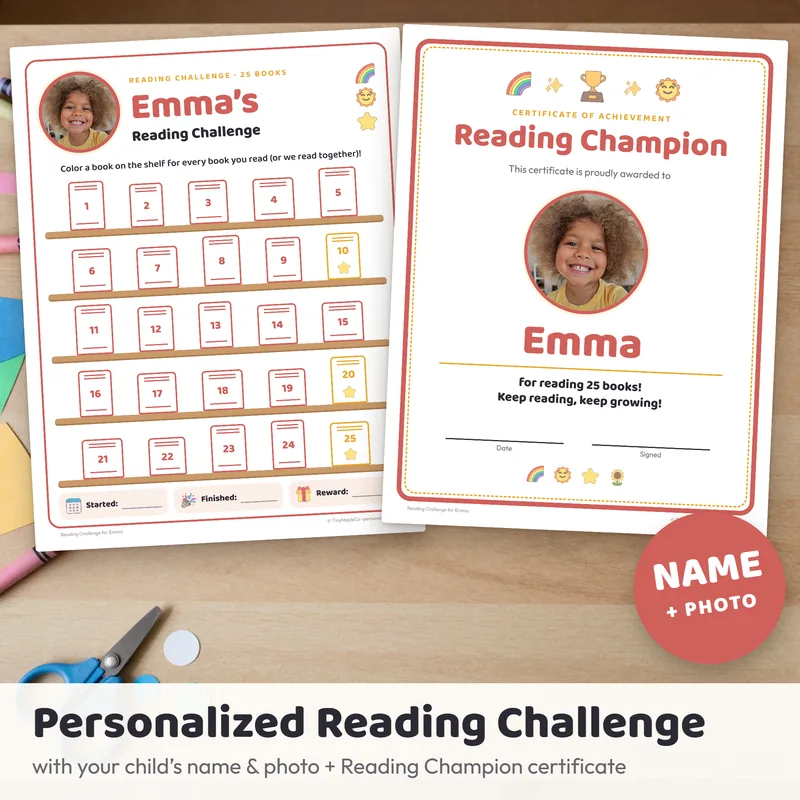
Personalized Reading Challenge + Reading Champion Certificate
25- or 50-book goal · ages 3–7 · name + optional photo
- Bookshelf tracker: color one book for every book read
- Reading log pages with a 3-star “I liked it” rating
- Reading Champion certificate + 4 name bookmarks
Personalized on Etsy · PDF files delivered within 24 hours
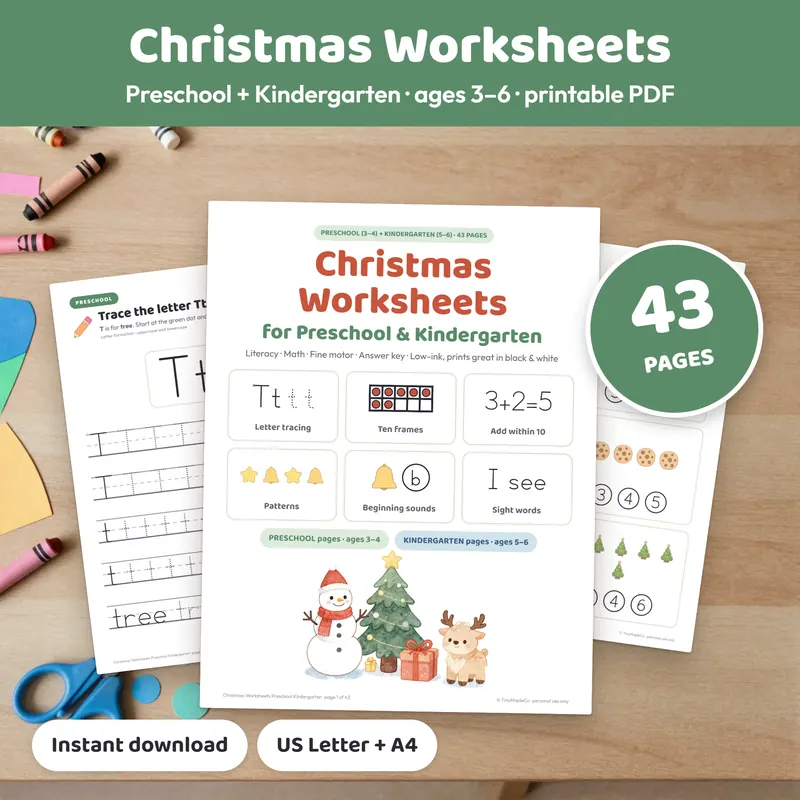
Christmas Worksheets for Preschool + Kindergarten
43 pages · Preschool (3–4) + Kindergarten (5–6) levels · US Letter + A4
- Letter tracing, beginning sounds, CVC words and sight words
- Counting, ten frames, number tracing 1–20 and adding within 10
- Cutting practice, mazes and a 2-page answer key
Instant download on Etsy · print at home
Frequently asked questions
How many books should a kindergartner read in a challenge?
For read-aloud picture books, 25 books over one or two months is a comfortable goal for most families. Fifty works well for a whole term or summer.
Do books I read aloud count?
Yes. For ages 4–6, being read to is reading. Picture books, read-alouds, rereads of favorites and library books all count.
What if my child loses interest halfway?
Switch to a mini-challenge (an animal book week, a reading picnic) for a few days, or lower the goal. Finishing a smaller goal feels better than abandoning a big one.