Potty training
How to Start Potty Training: A Calm First-Week Plan
Start potty training when your child shows readiness signs, not on a set birthday. Pick a calm couple of weeks with no big changes, put a potty where your child spends time, offer it at natural times (after waking, after meals, before bath), praise trying, and stay neutral about accidents. If it turns into a battle, pausing for a few weeks is fine.
I make potty charts, not medical advice, so everything below follows the American Academy of Pediatrics guidance on toilet training. Your pediatrician knows your child and is the best person to ask about anything specific.
Step 1: check for readiness
According to the AAP’s page on the right age to toilet train, common readiness signs include:
- Staying dry for at least 2 hours during the day, or waking dry after naps
- Showing signs before peeing or pooping (grunting, squatting, going quiet or hiding)
- Following simple instructions
- Walking to the bathroom and helping pull pants down
- Disliking wet or dirty diapers, or asking to use the potty or wear “big kid” underwear
The AAP notes that the average age to begin in the US is between 2 and 3, and most children are trained by 4. Children with special health care needs may follow a different path; their care team can help plan it.
Step 2: choose a calm time
Avoid starting right before or after a big change: a move, a new sibling, starting child care, a long trip or illness. The AAP suggests waiting in those situations. A quiet stretch of two to three weeks, ideally starting on a weekend, gives you room to go slowly.
Step 3: gather a few supplies
- A child-size potty or a seat insert for the toilet plus a sturdy step stool so feet are supported
- Easy clothes: elastic-waist pants, no overalls or tricky buttons
- Underwear or training pants, depending on your approach
- A few books about using the potty, to read together beforehand
- A simple chart if you want a visual way to celebrate (more on that below)
- Cleaning supplies kept nearby, so accidents are no big deal
Step 4: introduce the potty before you “start”
For a week or so beforehand, let your child sit on the potty fully dressed, read a book on it, and see family members use the bathroom if your family is comfortable with that. Use simple words for pee and poop and stick with them.
Step 5: the first week, day by day
There is no single correct method, but a gentle week often looks like this:
- Days 1–2: Offer the potty at natural times: after waking, after meals and drinks, before going out, before bath and bed. Keep sits short (a few minutes) and relaxed. Praise sitting, not just results.
- Days 3–4: Watch for your child’s cues and invite them to the potty when you see them. Keep using the same routine.
- Days 5–7: Start encouraging your child to tell you when they need to go. Practice pulling pants up and down, flushing (if they like it) and washing hands.
Expect accidents throughout. Many children need weeks or months, and staying dry at night often comes much later than daytime control.
Handling accidents
- Stay calm and neutral: “Pee goes in the potty. Let’s get clean clothes.”
- Never punish or shame. The AAP is clear that punishment and pressure can backfire and lead to power struggles.
- Involve your child in the cleanup in a matter-of-fact way, such as putting wet clothes in the laundry basket.
- Watch for withholding. If your child holds in poop, seems constipated or has pain, talk to your pediatrician.
About charts and rewards
The AAP cautions against using treats or punishments in ways that distract from a child’s own motivation, and recommends specific praise for what they did (“You sat on the potty and listened to your body!”). If you use a chart, use it to celebrate effort and progress, not as a bribe:
- A sticker for sitting, trying, and washing hands, not only for success
- Small, non-food milestones if any: choosing the bedtime book, a trip to the park
- Never taking stickers away for accidents
My potty training chart guide goes into what to track and how to handle setbacks. If you want a personalized version, our Potty Training Chart + Certificate is made to order with your child’s name, a 30-sticker chart and a Potty Graduate certificate. Any chart, including a hand-drawn one, does the same job.
Fitting it into the day
A routine chart helps because children know what comes next. Adding “potty” after “wake up” and before “breakfast” makes it a normal step rather than a request. My morning routine chart guide shows how to build a picture-based routine.
When to pause
Take a break of a few weeks if:
- Your child cries, hides or fights every potty sit
- Accidents are not reducing at all after a couple of weeks
- A big life change has come up
- You feel the process has become a daily fight
A pause is not a failure. Many children go from not interested to ready surprisingly quickly a month or two later.
When to talk to your pediatrician
Ask your child’s doctor if you notice pain when peeing or pooping, blood, constipation, or sudden new accidents after being trained. The AAP’s own advice is simple: if any concern comes up before, during or after toilet training, talk with your child’s doctor. It also suggests discussing toilet training at routine well-child visits between 18 months and 3 years.
Readiness, a calm start, praise for trying and patience with accidents cover most of it.
Printables that go with this post
These are from my shop on Etsy, where you see the price in your local currency.
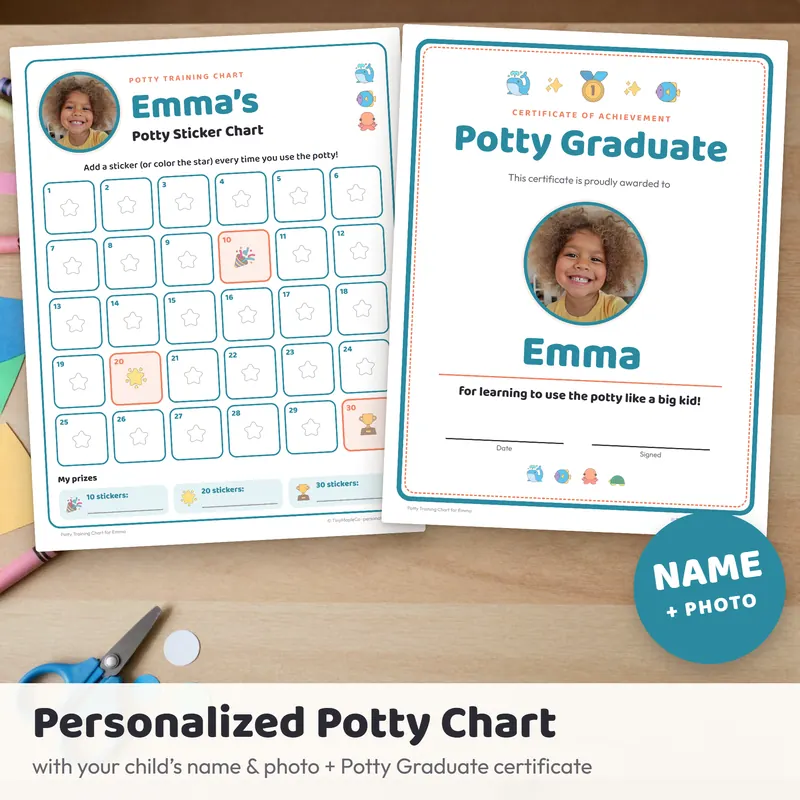
Personalized Potty Training Chart + Potty Graduate Certificate
5 personalized pages · name + optional photo · Dino, Space, Ocean or Rainbow theme
- 30-sticker chart with prize boxes at 10, 20 and 30 stickers
- Weekly chart: sat on the potty, pee, poop, washed hands, dry pants all day
- “Potty Graduate” certificate + 30 printable reward stickers (0.85 in)
Personalized on Etsy · PDF files delivered within 24 hours
Frequently asked questions
What age should you start potty training?
There is no single right age. The American Academy of Pediatrics notes that in the US training often begins between 2 and 3 years, and that readiness signs matter more than the calendar.
What are signs my child is ready?
Staying dry for about 2 hours or after naps, showing signs before peeing or pooping, following simple instructions, walking to the bathroom and helping undress, and disliking wet diapers or asking to use the potty.
Should I use rewards?
The AAP cautions against treats and punishments that turn toileting into a power struggle. Specific praise and a simple chart that celebrates effort, with small non-food rewards if any, is a gentler option.
When should we stop and try later?
If your child is upset, resisting strongly or withholding poop, or if the family is going through a big change such as a move or a new baby, it is fine to pause for a few weeks. Talk to your pediatrician about any concerns.